
Building Component 1
Safety policy objectives and planning
1.1 management commitment
Management demonstrate and achieve this by:
- Recognising the need for SMS and committing to it
- Announcing to the workforce that an SMS is to be implemented
- Writing and promoting a Safety policy
- Producing Safety Objectives Safety Performance Indicators and Targets
- Ensuring sufficient time, resources and personnel are available to implement the SMS
- Committing to the concept of a ‘Just culture’

Only points 3 and 4 require actual physical production. Examples are below:
- Sample safety policies
- Sample – Protection of Reporters (from ICAO SMM)
- Safety Objectives and Safety SPIs
The other points are achieved management meetings and workforce communication.
1.2 Safety Accountability and responsibilities
Personnel need to understand that they are accountable for the safety of others in the organisation. For this element management must:
- Endorse and promote the safety policy
- Ensure Key personnel are made aware of accountabilities
- Set up the company structure such that SM has direct and independent access reporting to the CEO.
- Enshrine management accountability in the SMM
Most importantly, all managers need to demonstrate a top down support for the SMS and the safety culture. Management ‘walking the walk’ is critical to personnel understanding that not only is the organisation serious about safety, but that every employee has a part to play in it.

1.3 appointment of key safety personnel
Critical to this element is the appointment of an appropriate Safety Manager (SM). This may be a full or part time role depending on the size and complexity of the organisation.
For this element management must;
- Appoint a Safety Manager who has appropriate training, qualifications and personal traits
- Appoint personnel to the SRC and SAG
- Enshrine the structure and purpose of SRC and SAG in the SMM

Management need to carefully consider all personnel in the key safety roles as an example to all staff. Clearly those with a professional and proactive attitude to safety will only have a positive influence on the overall safety culture.
1.4 Formulation of Emergency response planning
An Emergency Response Plan (ERP) is required so that the transition from normal to emergency, and back to normal procedures occurs as effectively and efficiently as possible.
For this element management must;
- Identify all situations that could be construed as emergency situations
- Document the procedures required
- Review the procedures on an annual basis; document this review.
- Practice all, or part of the ERP on an annual basis; review performance and modify the ERP as required.
The ERP for organisations will vary from a full EPR manual, to a laminated card with telephone numbers and basic instructions.

The SMS implementation team will work with both the SRC but more specifically the SAG to carry out the implementation in the time frame defined by management.
1.5 SMS documentation
SMS Documentation begins with the minutes from the management meeting deciding an SMS will be implemented, and it never finishes.
For this element management must;
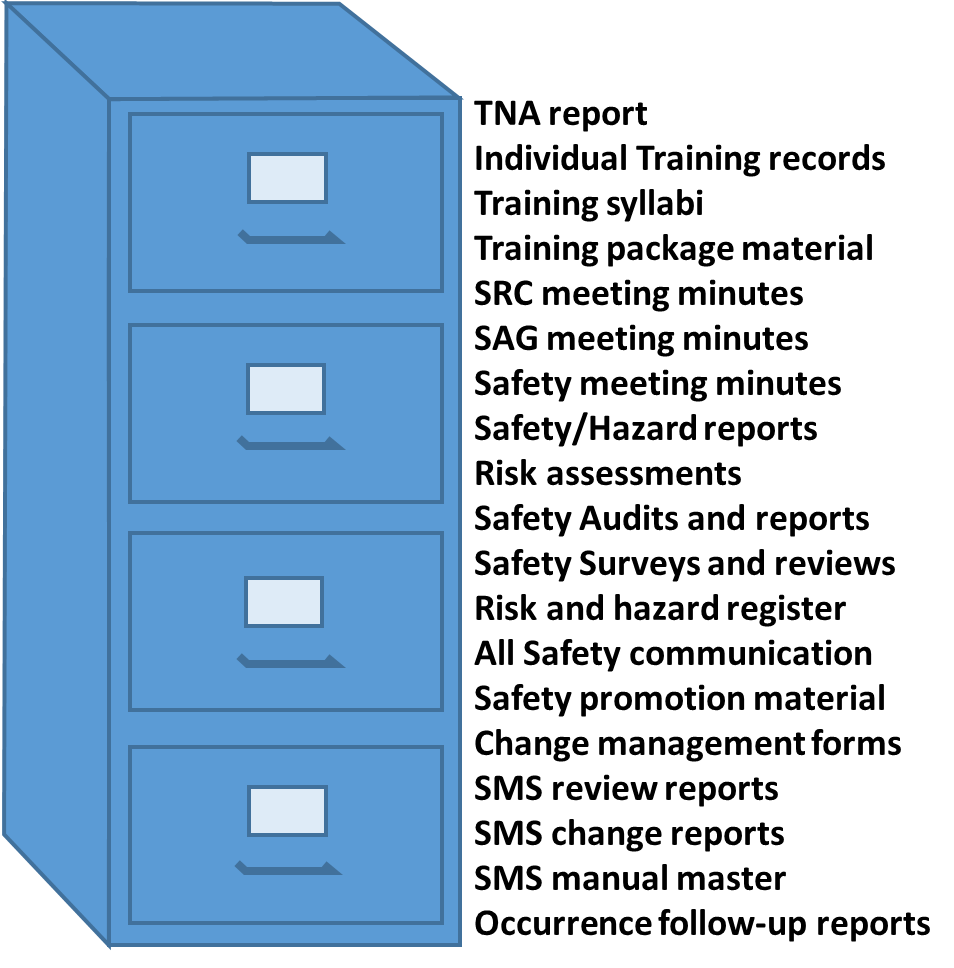
- Establish logical files and filing system for storage of SMS documentation.
- Ensure all documentation associated with SMS passes to this system
- Keep the system orderly and chronological for review and analysis.
- Establish an archiving system for older documents as detailed in the SMS manual
SMS documentation may be in electronic of paper format, or a combination of both. The Safety Manager or delegate is responsible for the storage and access to SMS documentation.
Third party interface
Having training TPCs in SMS, it is important that they feel empowered to be part of it. Part of Safety performance monitor and measurement might include a demographic of where hazard reports are originating from. Then providing feedback so that contributions are proportional and appropriate to the level of SMS exposure
The level of Third Party Contractor (TPC) interaction may vary, but the responsibility and accountability for the safety of all personnel, including TPCs, will not.
For this element management must;
- Create TPC safety requirements and expectations in the Service Level Agreement
- Identify all TPCs training requirement by conducting a TNA with Gap analysis (TPC Record of training)
- Arrange for SMS and HF training as required (Individual Training Record)
- Ensure all TPCs participate in the SMS processes and procedures, and state this involvement in a Service Level Agreement.
- Monitor and review TPC SMS input and interaction.

SMS implementation plan
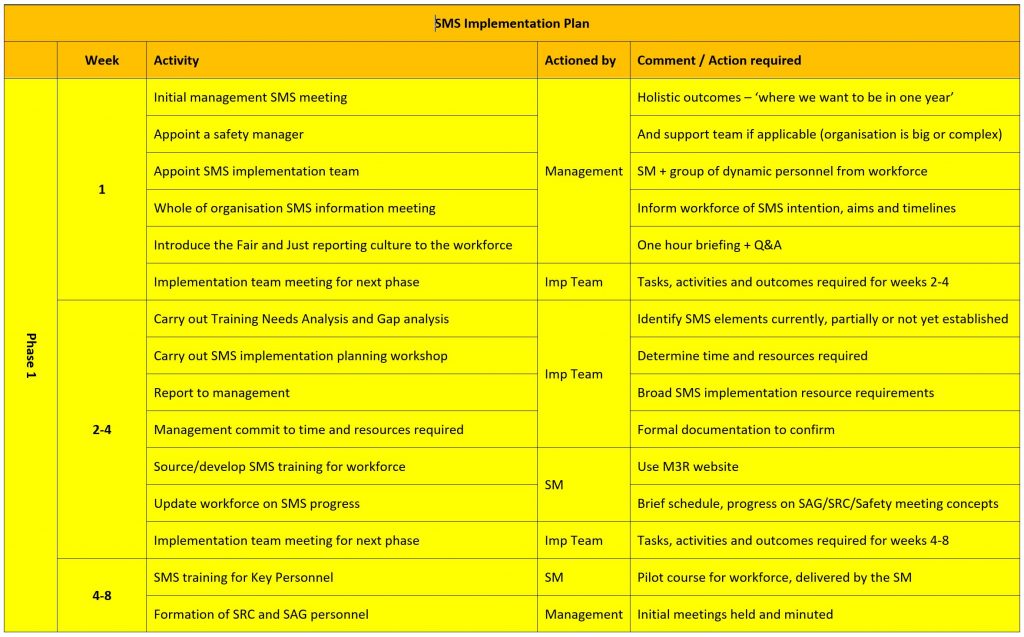
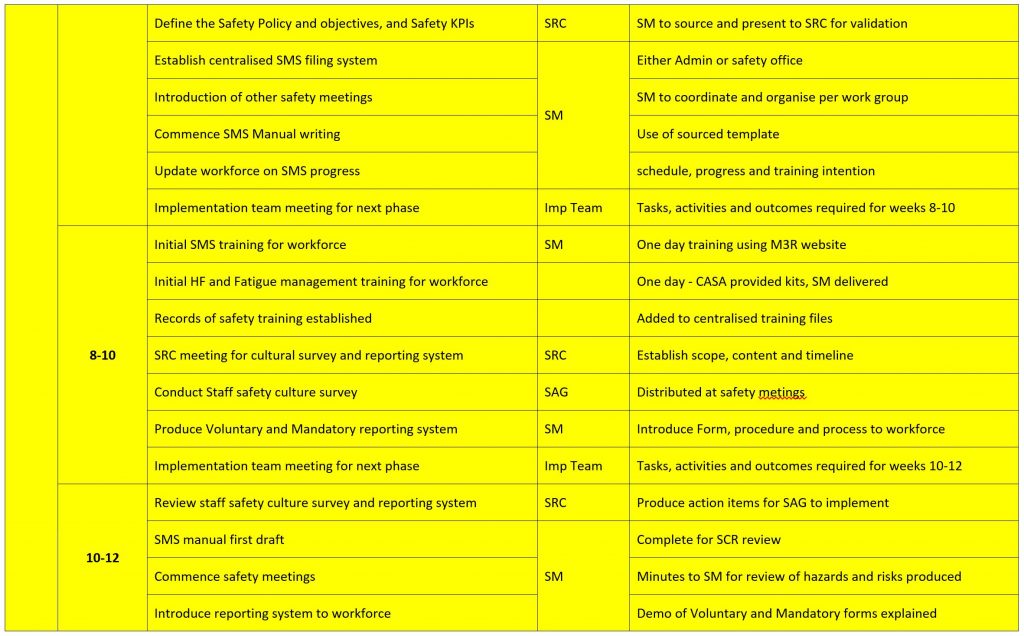
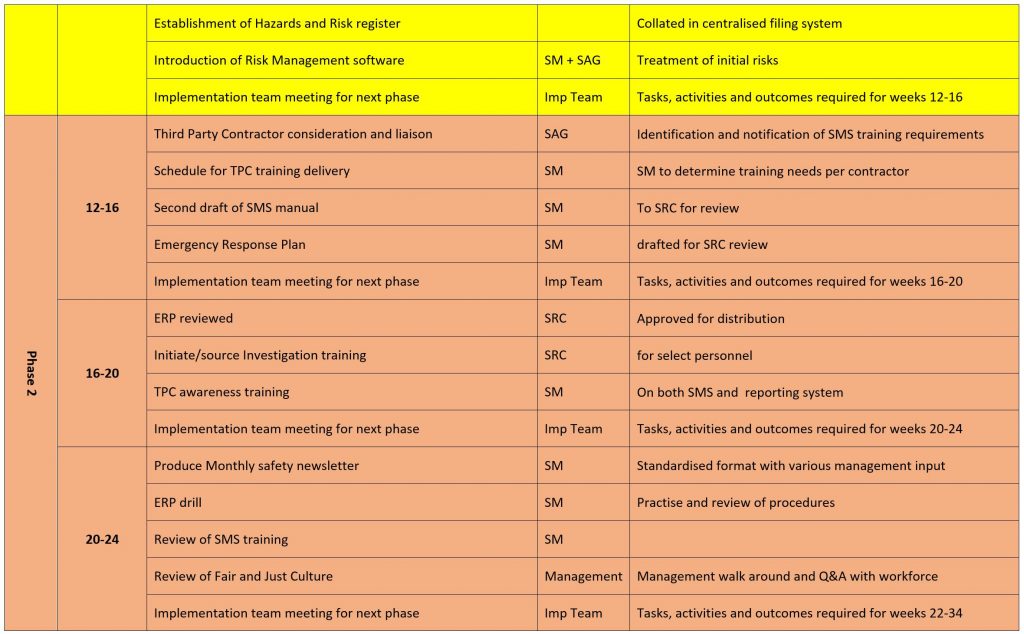
The CEO and the Safety Manager will nominate an implementation team. The team, normally headed by the SM will oversee all aspects of the SMS implementation.
For this element management must;
- Appoint an SMS implementation team
- Approve the SMS Implementation plan proposed
- Ensure time and resources are made available to implement the plan
- Monitor and review implementation progress
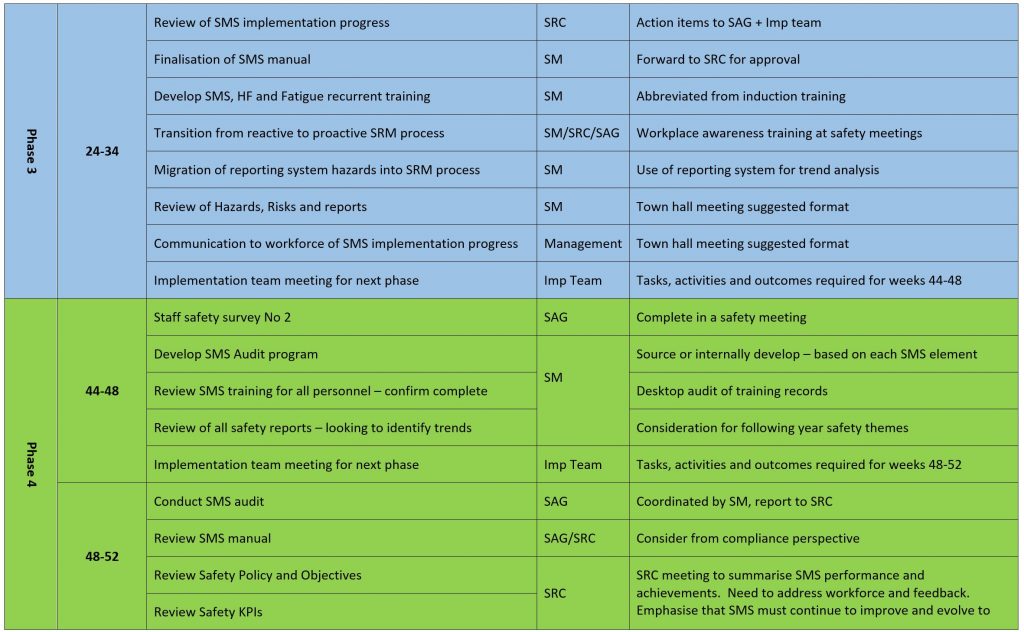
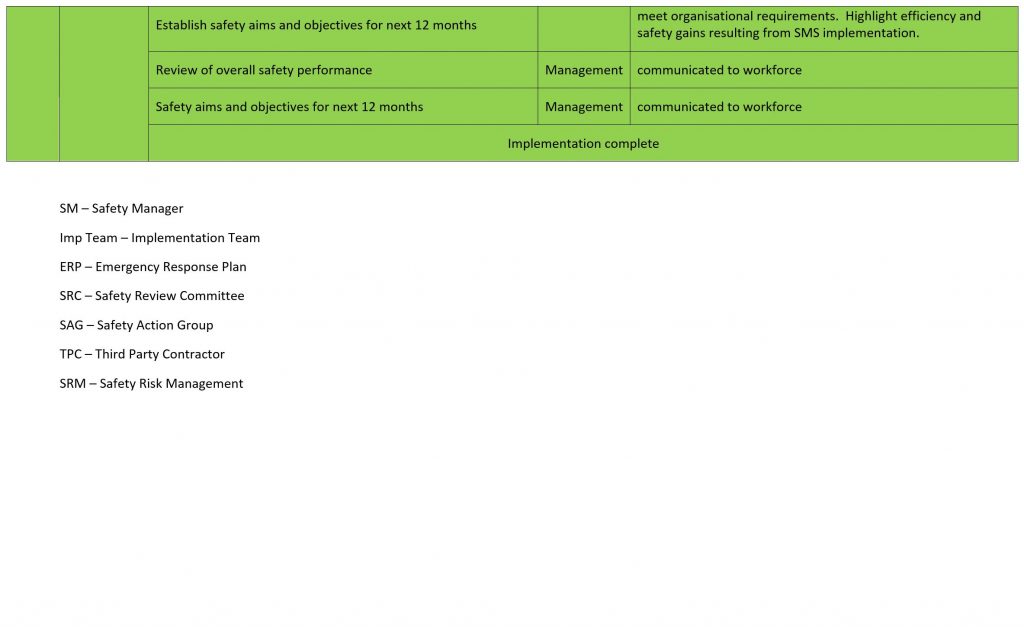
ADF SMS will follow ADF doctrine for implementation